

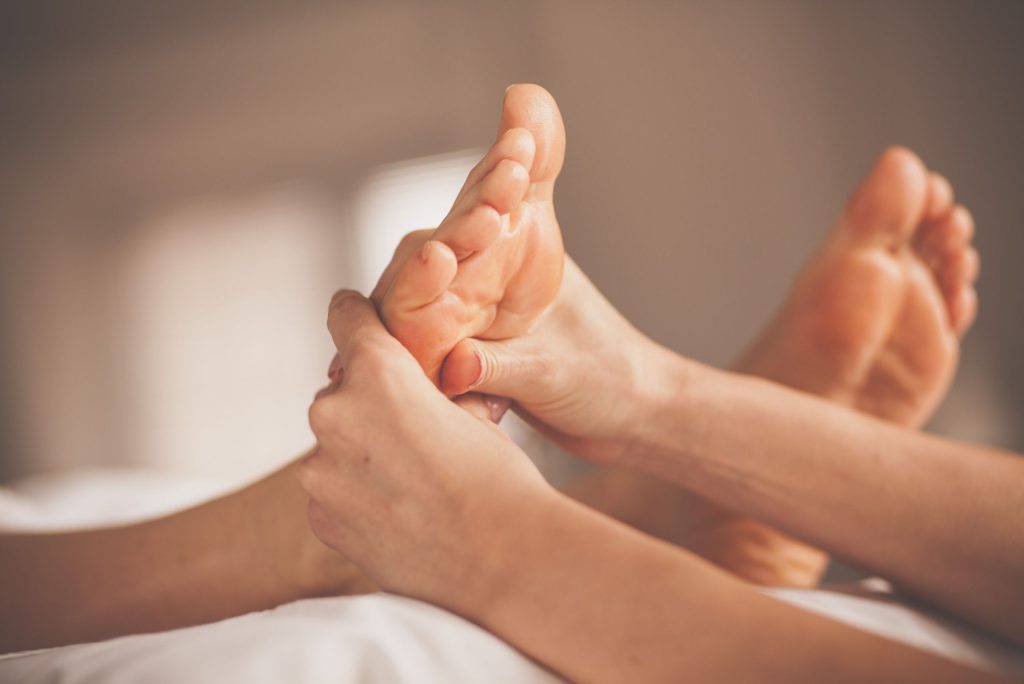
Using a Reflexology Foot Chart: What It Shows and How We Use It
If you've ever seen a reflexology foot chart in the clinic or perhaps I've shown it to you during a first treatment, you might have wondered, "What on earth does it all mean?" And you'd be right to think that, as it can look a little overwhelming. There are tiny sections labelled with organs, glands and body systems all squeezed onto the diagrams, but once you understand what the chart is designed to do, it starts to make much more sense.
As a clinical reflexologist, I use a reflexology foot chart as a guide throughout every treatment I do. It's a really helpful way for me to understand the reflex areas that correspond with different parts of the body, allowing me to tailor each session to the person in front of me and what their body is telling me it needs.
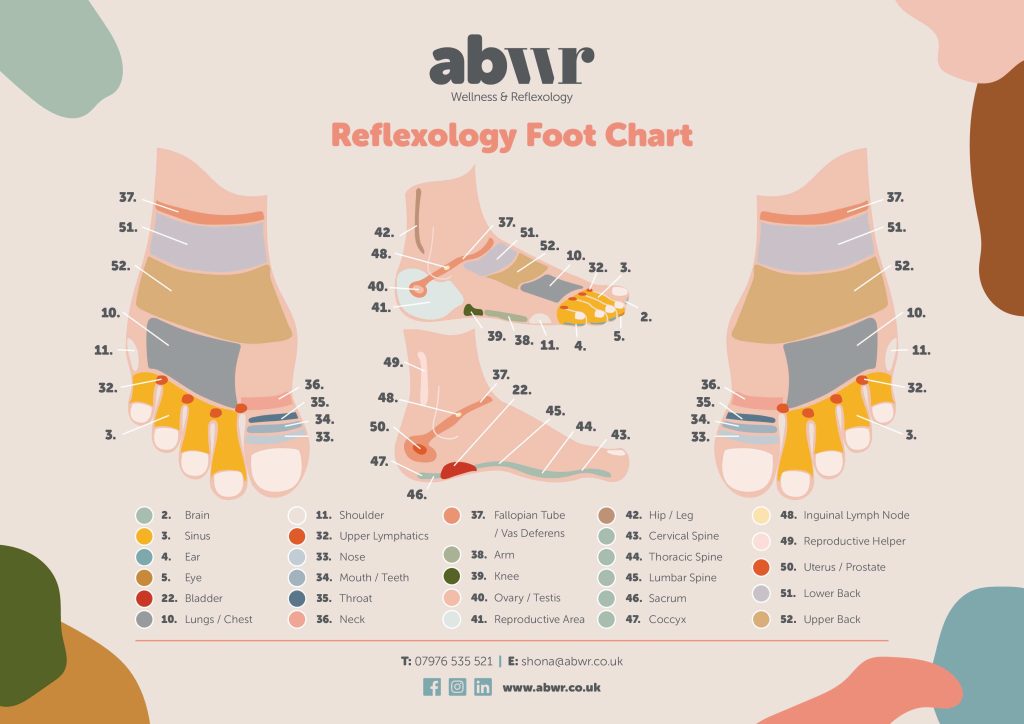
What is a reflexology foot chart?
A reflexology foot chart is a map of the feet. It shows the reflex points that are believed to correspond with different organs, glands and systems throughout the body. For example, you'll find reflex areas linked to the digestive system, spine, lungs, head, reproductive system and many more.
The principle behind reflexology is that by applying gentle pressure to these reflex points, we can encourage the body to relax, restore balance and support its own natural healing processes. The foot chart helps us understand where these reflexes are located, so we're working on the right areas.
How do I use a reflexology foot chart during a treatment?
During our consultation, you'll share with me any concerns or challenges you're having and what is important to you to prioritise, which helps me shape the treatment for what your body needs. Using a combination of traditional Chinese reflexology techniques and zone reflex points, I work through the feet in a structured sequence. This allows me to build up a picture of what your body might be telling me. I can notice if certain areas feel different, if tension has eased, or if anything has changed since your previous treatment.
From there, my more modern style of reflexology comes into play. For example, if you're struggling with digestive issues, I may spend longer working on the digestive reflexes. If you're looking for support with women's health, I'll naturally give more attention to the pelvic, reproductive and hormonal reflexes. On another day, if you've arrived after spending hours on your feet and they're feeling puffy, I may adapt my technique completely and work between both feet to help ease swelling and encourage circulation.
The sequence remains the same to begin with, but every treatment then develops its own flow depending on what your body needs that day.
Does it matter if a reflex point feels tender?
This question is one that comes up often. Occasionally, you may notice that one reflex feels a little more sensitive than another. This doesn't automatically mean there's something wrong with that part of the body. Tenderness can happen for many different reasons, including areas of tension within the feet themselves or simply because a particular reflex is more sensitive that day.
Rather than looking at one tender point in isolation, I always consider the whole picture. Your health history, lifestyle, symptoms and how the feet feel overall all help build a better understanding. Getting your feedback during the session is always really helpful, so if you ever feel tenderness or soreness during a treatment, be sure to raise this with your reflexologist.
It's not just a chart to strictly follow
One of the things I love most about reflexology is that every treatment is completely individual. The reflexology foot chart gives me a trusted map to work from, and the treatment sequence allows me to work through the whole body. From there, I can adapt each session to you, your lifestyle and how you're feeling on that particular day. The foot chart gives us an incredible resource to work from, but it's your body that shapes the treatments I deliver. Some appointments focus on helping bring calm to a busy life. Others support better sleep, digestion or recovery after illness or injury. Sometimes the greatest benefit is simply having an hour where you can completely switch off and allow your body to do what it does best: rest, repair and restore.
That's why I don't see the reflexology foot chart as a strict map to follow on it's own, but rather a guide to help me deliver the treatment in a way my clients need and with what will support them most. If you'd like to experience a reflexology treatment here with me in my cosy clinic in Chapelton, you can view all of my availability here. And you're always welcome to ask me anything about the reflexology foot chart because I love to share about it.