

Reflexology Points On The Feet That Work For Back Pain
The reflexology foot chart shows so many areas of the body that can be worked on during a treatment. In this blog, we're focusing on the spine, digestive system, urinary system, head, shoulders and the sciatic nerve. Each of these points on the feet can relate to back pain.
As a clinical reflexologist, back pain is something I regularly work with in the treatment room, and while the reflexology chart gives me a useful map to work from, I always look at the bigger picture rather than focusing on one area alone.
Where are the spinal reflexology points on the feet?
The spinal reflexes run along the inside edge of both feet, following the arch from the top of the big toe down towards the heel. When looking at the foot, I work through the spinal reflex from the very top downwards, moving through the areas that correspond with different sections of the spine. This is one of the key areas I would consider when someone comes to ABWR with back pain. During our consultation, I'll want to understand where you're experiencing pain, how long you've had it and whether anything else is going on alongside it. That might include tension through your neck and shoulders, changes to your digestion or urinary system, or discomfort travelling down into your legs. All of these things can help me build a better picture of what you need from your treatment. So even though the spine is a focus point, it's not the only reflex point we look at.
Top of the spine to the bottom
One of the things I love about working with the reflexology foot chart is that it gives me a structure to follow. When working with the spinal reflexes, I'll work from the top of the big toe, gradually moving down the inside of the foot towards the heel. I may spend more time in particular areas depending on where you're experiencing discomfort. I'll also consider the sciatic nerve reflex, as well as the brain and adrenal reflexes, which can be powerful areas to work on when there are pain and inflammatory issues in the tendons or muscles. It's worth noting here that working these areas can't directly cure a problem within your back. Instead, reflexology is used as a complementary approach, with the treatment designed to help you relax, support your overall well-being, and address areas that may be contributing to how you're feeling.
Looking at the body as a whole
Back pain rarely exists in complete isolation. For example, someone may arrive with lower back pain but also tell me they've been feeling uncomfortable and unwell in the gut area, which could indicate digestive issues. Someone else may have upper back pain alongside tightness through their neck and shoulders. This is where the wider reflexology chart becomes useful. It's about looking at your body as a whole rather than treating a body part in isolation, as it's important to find out exactly what is causing the back pain and where it is located.
Warming the feet
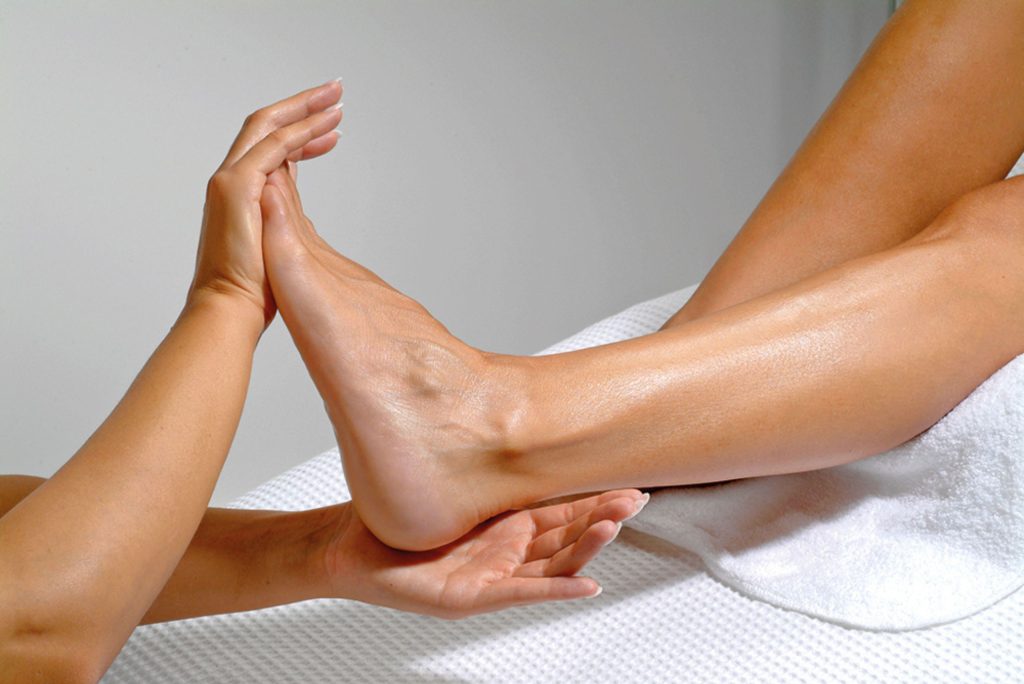
Before getting into more focused work, I like to properly warm up the feet. This might include massage, gentle movements, ankle rotations and stretches to encourage flexibility and provide a circulation boost through the feet. It can be easy to overlook just how much tension we carry in our feet. If they're tight and restricted, taking some time to warm and relax them can make the rest of the treatment feel much more comfortable. I'll then move into the reflexology sequence, adapting my pressure and technique based on what I find and what you've told me during our consultation.
Is there anything that can be done at home?
If you want to help yourself at home between reflexology sessions, you can spend just a few minutes each day applying pressure to the spinal reflex area. Using your thumb, you can gently slide along the inside edge of the foot, starting at the top of the big toe and gradually working towards the heel. Repeat this several times until the area begins to feel smoother, as you may find it feels quite crunchy, tender or tight when you first start working on it. If you do, don't feel that you need to press harder or try to "work out" a tender spot. Keep the pressure comfortable and gentle and if you're experiencing ongoing or unexplained back pain, it's important to have this properly assessed by an appropriate healthcare professional.
Reflexology points on the feet are only part of the picture
The foot chart is an incredibly useful tool, but it's just that: a tool. When you come for a treatment at AB Wellness & Reflexology, I'll use the reflexology chart alongside your consultation, your health history and how your feet feel on the day. Sometimes the focus will be very much around the spinal reflexes. Or it may be we work on the digestive, urinary, head, shoulder, sciatic or other reflex areas depending on what is causing your back pain. That's what makes each treatment individual to you and how you're feeling.
If you've been experiencing back pain and would like to explore whether reflexology could be a suitable complementary therapy for you, you're very welcome to get in touch, and I'd love to welcome you to the AB Wellness & Reflexology clinic in Chapelton, Aberdeenshire. We can have a chat about what's been going on and whether a treatment is appropriate for you. Click here to find out our next available appointment time.